
Lucky Bamboo Plant Care
Lucky bamboo is one of the easiest houseplants you can keep, and one of the most meaningful. Despite the name it isn't a true bamboo at all; it's a Dracaena sanderiana, a hardy tropical native to Central Africa that's happy growing in nothing but a vase of water. Give it clean water, warmth, and bright indirect light, and it will bring a little green (and, as tradition holds, a little good fortune) to your home or desk for years.
Lucky bamboo care at a glance
| Light | Bright, indirect light. Never harsh direct sun |
| Water | Keep roots covered; refresh weekly. Use filtered or distilled if you can |
| Temperature | Warm, 65 to 90°F. Keep away from cold drafts |
| Grows in | A vase of water with pebbles, or well-draining soil |
| Fertilizer | Very sparingly, a drop of diluted feed now and then |
| Pets | Toxic to cats and dogs; keep out of reach |
| Difficulty | Beginner. Hard to kill with a little attention |
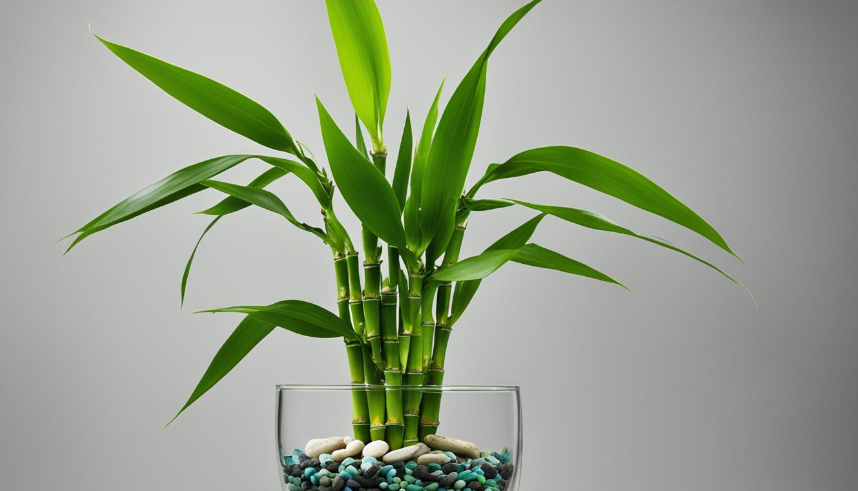
Water (the heart of lucky bamboo care)
Most lucky bamboo is grown right in water, so the water is everything. Keep the roots covered with an inch or two, and top it up as it evaporates. Refresh the water completely about once a week to keep it clear and prevent algae, rinsing the pebbles and vase when you do.
One important catch: lucky bamboo is sensitive to the chlorine and fluoride in most tap water, which show up as brown, scorched leaf tips. If you can, use distilled, filtered, or rainwater. If you only have tap water, let it sit out overnight before using it so some of the chlorine can escape.
Light
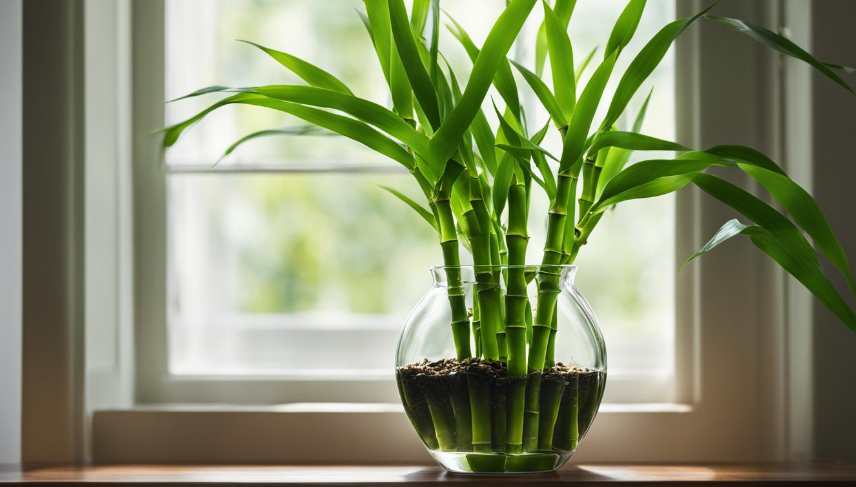
Give lucky bamboo bright but indirect light. It evolved under the forest canopy, so it likes gentle, filtered brightness and dislikes harsh direct sun, which scorches the leaves. Too little light and the plant turns pale and leggy; the sweet spot is a bright room set back from the window. To create those elegant curved stalks, simply rotate the plant so it grows toward the light.
Temperature
As a tropical plant, lucky bamboo likes it warm, roughly 65 to 90°F, and steady. Keep it away from cold drafts, heating vents, and windowsills that get icy in winter.
What the stalks mean
Part of lucky bamboo's charm is its symbolism, and the number of stalks carries different meanings: two for love, three for happiness, five for wealth, and so on. One number is traditionally avoided: four, which is linked to bad luck. Curious about the full meaning behind the stalks? Read our guide to what lucky bamboo means.
Fertilizing
Lucky bamboo barely needs feeding. A single drop of diluted liquid fertilizer every couple of months is plenty, and only during the growing season. Too much fertilizer, like poor water, shows up as yellowing, so when in doubt, feed less.
Common problems
Brown, crispy leaf tips. Almost always chlorine or fluoride in tap water. Switch to filtered, distilled, or rainwater, or let tap water sit out overnight first.
Yellow stalks or leaves. Usually too much fertilizer or old, dirty water. Refresh the water, rinse the vase, and hold off on feeding. Trim a yellowing stalk back to healthy green tissue.
Algae in the vase. Light plus nutrients in the water grows algae. Use an opaque container, refresh the water weekly, and rinse the pebbles.
FAQ
How do I care for lucky bamboo?
Keep the roots in clean water (refreshed weekly), give it bright indirect light and warmth, and feed it very sparingly. Use filtered or distilled water to avoid brown tips. That's really all there is to it.
How often should I change lucky bamboo's water?
About once a week. Fresh water keeps it clear, prevents algae, and keeps the roots healthy. Top up between changes as the water evaporates.
Why are my lucky bamboo's tips turning brown?
Chlorine or fluoride in tap water is the usual cause. Switch to filtered, distilled, or rainwater, or let tap water sit out overnight before using it.
Is lucky bamboo a real bonsai?
No. It's a Dracaena, not a tree, so it isn't trained as bonsai. It's a lovely, easy plant in its own right, and if it's given you the bug for living greenery, a real bonsai is a wonderful next step.
Is lucky bamboo toxic to pets?
Yes. Lucky bamboo is toxic to cats and dogs if chewed, so keep it somewhere your pets can't reach.
Caught the bug? Try a bonsai next
If caring for your lucky bamboo has you wanting a living tree you can shape and grow for decades, bonsai is the natural next step, and it's more approachable than you might think.
- Explore beginner bonsai trees, chosen to be forgiving for first-timers
- New to it all? Start with our beginner's guide to bonsai care
- Prefer to learn hands-on? Join a workshop at the nursery