
Jaboticaba Bonsai Care Guide: Light, Watering, Soil, Pruning & Fruiting
A practical, species-specific guide to growing Jaboticaba indoors or outdoors in warm weather, protecting its fine roots, and understanding the unusual fruit that develops on mature trunks.
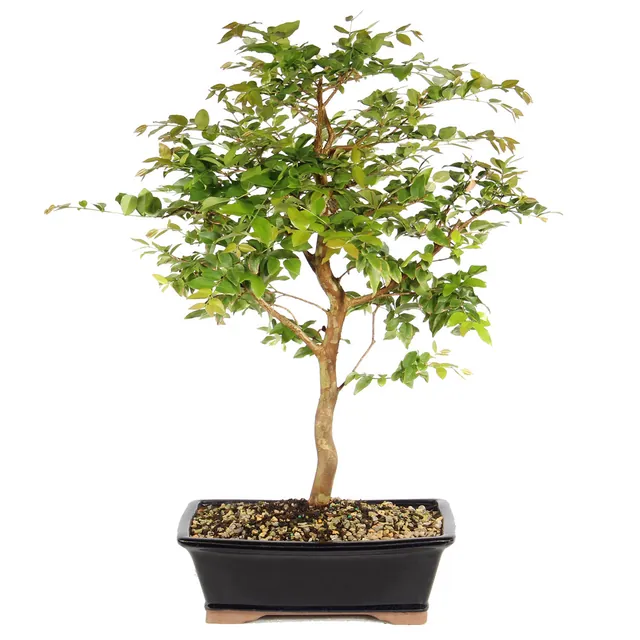
Quick care snapshot
| Care factor | Bonsai Outlet recommendation |
|---|---|
| Name | Jaboticaba / Jabuticaba; often Plinia cauliflora (formerly Myrciaria cauliflora). Related Plinia species are also sold under the same common name. |
| Growing location | Warm-weather outdoor growing is ideal for strength. Indoor culture is possible with very bright light, warmth and attentive watering. |
| Light | Full sun to partial shade outdoors after acclimation; bright unobstructed window plus a quality grow light indoors when needed. |
| Water | Keep the root zone evenly moist but oxygenated. Check the upper ¼–½ inch and the deeper rootball; do not allow complete drought. |
| Soil | Well-drained, moisture-retentive structure; mildly acidic root zone, often approximately pH 5.5–6.5. |
| Bonsai Outlet soil | Tinyroots All-Purpose is our easier starting point for typical beginners; Premium works with closer moisture monitoring and watering. |
| Temperature | Avoid frost and extended chill. For small potted bonsai, bring indoors before nights approach 50–55°F (10–13°C). |
| Fertilizer | Choose one complete fertilizer during vigorous growth. Bonsai Thrive 180 is practical for development; MicroTotal is an optional supplement. |
| Pruning | Clip-and-grow in active weather. Protect bark, branches and any selected mature wood you hope will fruit. |
| Repotting | Warm-season only, preferably after active growth begins. Conserve fine roots; do not do heavy root work on a weak tree. |
| Winter | Bright protected environment, reduced fertilizer if growth slows, and careful moisture checks. No freezing dormancy required. |
| Fruiting | Cream-colored flowers and grape-like purple fruit can develop directly on mature wood; young bonsai may need years. |
| Difficulty | Intermediate—beautiful and manageable, but not a drought-tolerant desk plant or a guaranteed quick-fruiting gift. |
What is a Jaboticaba bonsai, and why is it so unusual?
Jaboticaba is a slow-growing, evergreen fruit tree from South America, prized in bonsai for small glossy leaves, naturally decorative bark and a remarkable fruiting habit. Its flowers and dark purple, grape-like fruit can emerge directly from the trunk and older branches. That feature is called cauliflory, and it is genuinely special.
The name gets confusing. In the trade, our trees have often been labeled Myrciaria cauliflora; current botanical references commonly use Plinia cauliflora. Other species in the genus Plinia are also sold as Jaboticaba, and their exact growth and fruiting behavior can differ. The advice here is for the Jaboticaba types commonly sold for bonsai; match the label on your particular tree when possible.
A tree does not need fruit to be worthwhile. We particularly like its graceful canopy, delicate-looking young growth and the character of a trunk that can become increasingly interesting over the years. Do not mistake normal patchy or peeling bark for a disease.
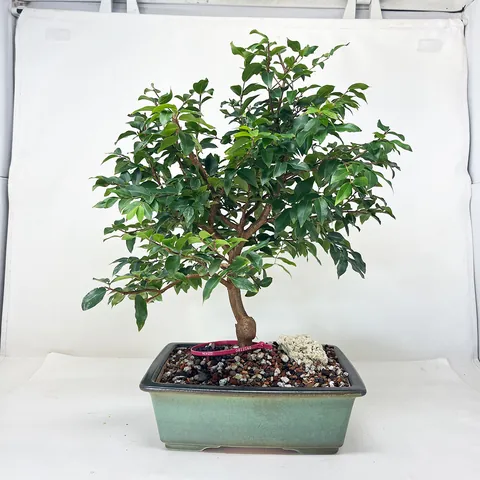
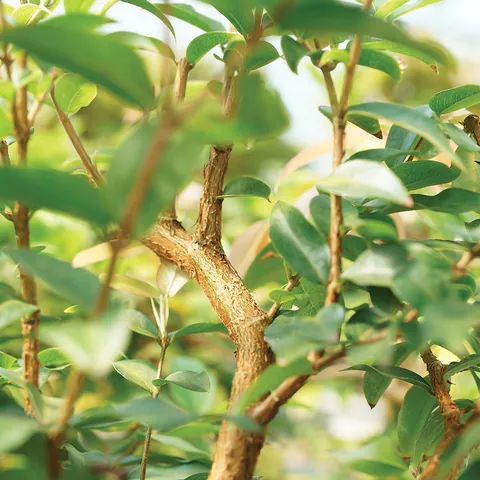
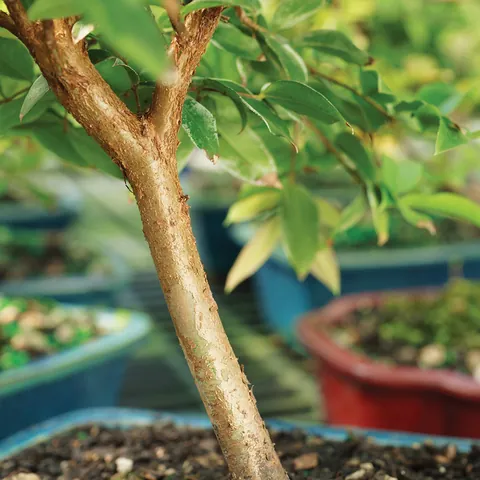
What should you do with a new Jaboticaba during the first 30 days?
For your first month, prioritize a stable location and learning how the pot uses water. A newly shipped Jaboticaba may shed a few leaves or pause its growth after a sudden change in light, temperature or humidity. That does not automatically call for repotting or fertilizer; check the roots and conditions first.
When we help new bonsai owners, we would rather see them learn the pot and growing environment first than rush to style it. With Jaboticaba, that simple habit is especially valuable: its fine roots prefer steady moisture, not a cycle of soaking and total drought.
Should Jaboticaba bonsai live indoors or outdoors?
Our preferred growing environment is outdoors during consistently warm weather, where a Jaboticaba can receive stronger sunlight and natural airflow. It can also live indoors, which is how many customers enjoy theirs in winter, but indoor success depends on very bright light, sufficient warmth and a more attentive moisture routine than most room plants need.
| Where the tree lives | Benefits | Challenges |
|---|---|---|
| Outside in summer | Stronger light, fresh air and better potential growth. | The pot may dry quickly; intense sun can scorch an unacclimated tree. |
| Bright window / sunroom | Controlled warm conditions and year-round access. | Short winter days, low humidity and cold window drafts can reduce vigor. |
| Indoor grow-light area | Reliable light when windows are inadequate. | Requires correct lamp placement, daytime schedule and consistent root care. |
| Outdoors in truly mild climates | Long warm seasons can favor stronger development. | Cold snaps and localized frost still threaten bonsai roots. |
How much sun does a Jaboticaba bonsai need?
Outdoors, established Jaboticaba generally grows well with full sun to partial shade; in very hot settings, some afternoon protection is sensible. Indoors, use your brightest suitable unobstructed window and supplement with a plant grow light when days are short. Long weak internodes and a thinning canopy usually mean the tree needs more usable light.
If the tree has lived indoors for months, acclimate it outside gradually over about 10–14 days. Begin in bright shade or morning sun and expand exposure according to the foliage’s response. Pale, bleached patches after a sudden move suggest sun damage; move to gentler light and let new leaves develop.
How often should you water a Jaboticaba bonsai?
There is no reliable fixed schedule. Jaboticaba prefers consistent moisture without a permanently saturated rootball, so check below the surface and water before the pot dries completely. A shallow outdoor pot in summer may need attention daily; the same tree under winter grow lights may use water much more slowly. The root-zone condition—not the calendar—decides.
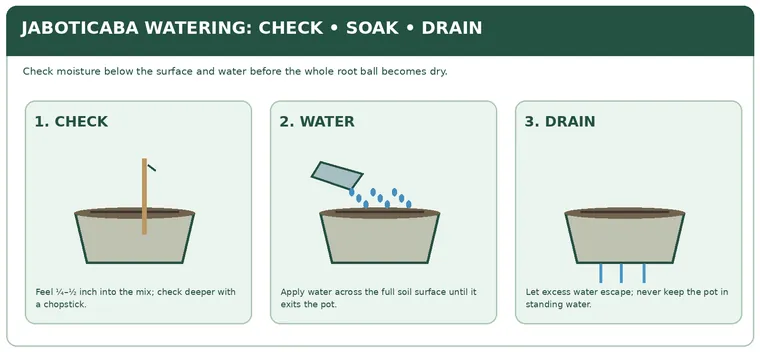
- Insert a finger about ¼–½ inch into the soil or use a wooden chopstick if the pot is shallow. If the mix is still distinctly damp deeper down, wait and recheck.
- When the upper zone begins losing moisture and the deeper rootball is no longer very wet, water slowly across the entire surface.
- Continue until water flows freely from the drainage holes. If a dry pocket resists water, make another slow pass instead of wetting only one spot.
- Let the pot drain completely. Empty its saucer and keep a humidity tray’s waterline below the pot base.
- Recheck more often in hot wind, bright summer sun and after repotting; check less frequently in cool low-light winter conditions, but never allow prolonged complete dryness.
A few limp or dry-edged leaves can indicate a thirsty rootball, but similar-looking foliage can occur when roots are damaged by poor drainage. Before adding more water to a declining tree, examine the soil at depth, drainage holes and trunk condition. Never diagnose the whole tree from a single leaf.
What soil does Jaboticaba need, and why does acidity matter?
Jaboticaba grows best in a moist, well-aerated, well-drained root zone that is mildly acidic. A practical target is roughly pH 5.5–6.5, although individual trees and water supplies differ. Poor drainage suffocates roots; an overly alkaline growing environment can interfere with nutrient availability. Both can produce yellowing leaves, so the first step is investigating conditions rather than guessing.
Jaboticaba is not a cactus. A bone-dry, ultrafast mix may be easy to over-dry in a sunny bonsai pot, while soggy, fine, compacted material can suffocate its fine roots. We want something in between: moisture retention with visible air spaces and reliable drainage.
Which Tinyroots soil is better for Jaboticaba bonsai?
For most first-time owners, our starting choice is Tinyroots All-Purpose because it balances drainage with somewhat more moisture retention. Tinyroots Premium—an inorganic akadama, pumice and lava blend—is excellent when the grower can monitor moisture closely. Neither blend should be assumed to automatically establish the ideal acidity: test the root zone or water if chlorosis persists.
| Soil option | When we recommend it | What to watch |
|---|---|---|
| Tinyroots All-Purpose | Most beginners and routine repotting; granular mix with pumice, lava, slate and controlled pine bark fines. | Moisture lasts somewhat longer; check depth before watering. |
| Tinyroots Premium | More experienced or frequently attentive growers; fully inorganic akadama, pumice and lava. | Faster drainage; the pot may need more frequent watering, especially outdoors. |
| Finely shredded mulch sold as “premium” bonsai soil | We do not recommend it for Jaboticaba in a shallow bonsai pot. | It may compact, hold uneven moisture and restrict oxygen around roots. |
| Plain dense potting mix without drainage | Not a sound long-term bonsai setup. | Waterlogged soil and damaged fine roots are real risks. |
A note about the word organic: properly sized pine bark fines in a structured bonsai blend are not the same as a bag of wet, finely shredded mulch. At Bonsai Outlet we know the difference, and it matters. Healthy roots need both water and oxygen.
Why do drainage holes matter for Jaboticaba?
Every conventional Jaboticaba bonsai pot needs functional drainage holes because moisture is useful only when oxygen can still reach the roots. Watch what happens during watering: water should move through the pot rather than puddle for a long period. A decorative pot without drainage can turn “keep it moist” into chronic saturation.
If your bonsai arrived in a dense nursery mix, do not automatically rip out all the roots on the day it arrives. First evaluate whether the medium drains and the tree is stable. Correct genuine drainage problems promptly, but reserve planned root work for warm active growing conditions whenever practical.
What fertilizer should you use on Jaboticaba?
Feed a healthy Jaboticaba while it is actively producing new leaves and shoots. We prefer a simple program rather than combining multiple complete fertilizers and hoping for faster fruit. For developing tropical bonsai, Bonsai Thrive 180 is our practical slow-release choice. MicroTotal can supplement micronutrients when appropriate but is not a complete fertilizer or a cure for high soil pH.
Bonsai Thrive 180 is a 19-5-9 slow-release fertilizer used by our nursery team on tropical stock. Follow the current product instructions for pot size and application interval; do not apply it heavily to a newly root-pruned or inactive tree. If you already use another complete fertilizer, calculate the total feeding program before adding anything.
For mature fruiting material, flowering-oriented fertilizer decisions should be based on the tree’s vigor and the existing feeding program—not on a promise that extra phosphorus will make a young Jaboticaba fruit. Good light, age, stable water, healthy roots and genetics matter far more than a magic bottle.
- Shop Bonsai Thrive 180Slow-release 19-5-9 for active growthShop →
- Shop MicroTotal micronutrient supplementOptional; not a complete fertilizerShop →
- Read Bonsai Outlet’s Tropical Bonsai Fertilizer GuideBonsai Outlet’s tropical bonsai feeding guideRead →
A healthy, actively growing tree uses fertilizer. A weak tree with failing roots does not need more pellets. Through years of growing bonsai in both Massachusetts and Florida, we have learned to correct water, light and root conditions before changing fertilizer.
When will a Jaboticaba bonsai flower and produce fruit?
Jaboticaba can produce white flowers followed by grape-like dark purple fruit directly from its mature bark, but young bonsai may take years to reach that stage. Seed-grown trees often need considerably longer than grafted or vegetatively propagated selections. Fruiting depends on species, age, maturity, light, nutrition and growing conditions, and is never guaranteed on a small starter tree.
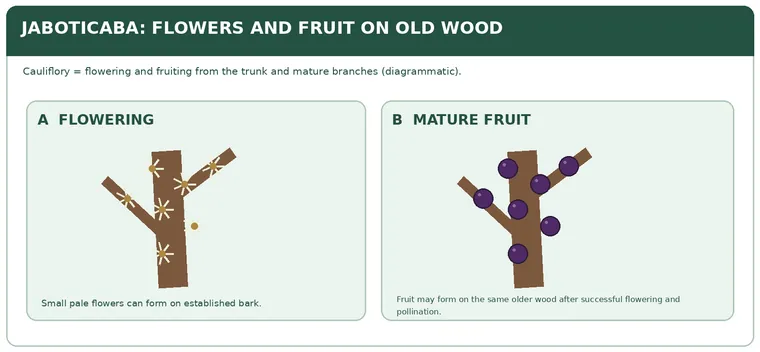
Some university sources describe roughly eight to ten years before seed-grown landscape plants begin fruiting, and sometimes earlier with propagated selections. Those are broad species observations, not a clock for an individual bonsai. A tree kept very small and repeatedly hard-pruned may take longer. Enjoy its foliage and bark while the trunk matures.
What do Jaboticaba flowers and fruit look like?
The blossoms are small and pale, often appearing clustered along the trunk and older branches rather than only at branch tips. Fruit begins green and gradually becomes deep purple to nearly black as it matures. Flowers, developing fruit and mature berries may appear in separate flushes; whether they appear at all depends on the maturity and condition of your tree.
Fruit from correctly identified edible Jaboticaba types is commonly eaten fresh, but we recommend treating fruit from ornamental bonsai as display fruit unless you know exactly what plant you have and what pesticides or other treatments it has received. Do not encourage customers to eat berries from an unidentified or treated bonsai.
How should you prune Jaboticaba without sacrificing future fruit?
Jaboticaba responds to careful clip-and-grow when it is strong and warm, but heavy repeated cutting can remove mature branch material and delay fruiting. First decide whether you are building structure or refining a mature tree. Shorten vigorous new extensions above a useful leaf pair, preserve selected older wood and avoid stacking hard pruning with repotting.
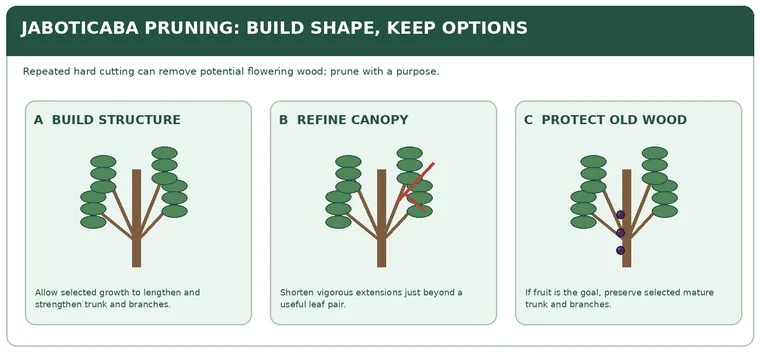
- Wait for active growth and allow a new extension to strengthen.
- Find the useful section of branch and a leaf pair or node positioned to support the next shoot.
- Cut cleanly just beyond that position with sharp shears; do not crush small stems.
- Let the tree respond before pruning that branch again.
- If fruiting matters, keep selected mature branches rather than regularly removing all of the old wood.
Wiring is possible, but Jaboticaba bark can mark. Use gentle bends while wood is flexible, inspect wire often and remove it before it cuts into expanding bark. Clip-and-grow is a more forgiving approach for most first-time owners.
When is the right time to repot Jaboticaba?
Repot while the tree is healthy, warm and actively growing, generally late spring or summer in New England. Jaboticaba has numerous fine feeder roots and can remain in a snug pot for some time; do not repot simply because the calendar says a year has passed. Look for reduced drainage, failing soil structure or a pot that genuinely restricts growth.
For a beginner repot, select a container with working drainage holes, gently loosen the outer roots and replace broken-down soil without stripping away a large portion of fine roots. Secure the tree, refill with a consistent granular mix and settle it carefully. Aftercare should reflect how much root disturbance occurred.
Do not combine a hard root reduction, heavy top pruning and full sun on the same day. A significantly root-pruned tree may require specialized aftercare, particularly in hot or windy weather. When in doubt, attend a workshop or arrange a private bonsai session before undertaking major work.
How does Jaboticaba care change by season?
Jaboticaba remains an evergreen tropical/subtropical tree; it does not require a freezing winter dormancy. It often grows most vigorously during warm, bright months and can slow substantially indoors in winter. Adjust watering and feeding according to actual growth, and protect its small pot from cold sooner than you would a mature landscape tree.
| Season | Location and light | Water, feeding and work |
|---|---|---|
| Spring | Move outdoors only once nights are safely warm; gradually acclimate to stronger sun. | Increase checks as new growth accelerates; fertilize after vigorous growth resumes. |
| Summer | Outdoor sun/filtered sun with airflow; shelter from extreme wind or heat. | Watch shallow pots closely, prune active shoots, plan warm-season repotting when needed. |
| Autumn | Bring indoors ahead of nights around 50–55°F (10–13°C); check for pests. | Expect slower drying as temperatures and day length decline; taper feeding. |
| Winter | Strong window or grow light, stable warmth, away from vents and cold drafts. | Keep root zone lightly to evenly moist, not soggy; feed only if active growth justifies it. |
How do you overwinter Jaboticaba indoors in New England?
Move the tree inside before repeated chilly nights stress the roots, using our conservative 50–55°F bring-in threshold for container bonsai. Put it near the brightest suitable window or under a properly positioned grow light, keep it away from furnace blasts and freezing glass, and check moisture regularly rather than relying on summer habits.
Mature Jaboticaba landscape trees in certain warm regions may tolerate brief light frost, but that does not make a small imported bonsai safe outdoors in Massachusetts. We care about the fine roots and the whole history of that tree, not just a number found on a cold-hardiness chart.
Why are my Jaboticaba leaves turning yellow or brown?
Yellow, brown or dropped leaves can reflect several different problems, including dry roots, prolonged saturation, poor drainage, cold damage, inadequate light, salts or nutrition. Younger leaves with green veins and yellow tissue may suggest impaired iron uptake, especially when the root zone is too alkaline. Do not treat every yellow leaf with fertilizer before checking the basics.
What pests and diseases affect Jaboticaba bonsai?
Jaboticaba is not particularly pest-prone when growing strongly, but scale insects, aphids, mealybugs and spider mites can occur, especially when plants are crowded indoors. Inspect stems and leaf undersides. Some leaf damage also comes from cultural conditions rather than insects, so identify the culprit before spraying.
- Move a suspected infested tree away from other bonsai and houseplants.
- Use a magnifier to check leaves, branch joints and bark; determine whether the bumps are actually insects.
- Begin with careful physical removal or rinsing when practical; protect the soil from washing out.
- If treatment is needed, choose a product labeled for the identified pest and compatible with ornamental bonsai; test a small area first.
- Reinspect over the following two weeks; insects often remain hidden after the first cleaning.
We do not recommend routine neem oil or homemade dish-soap mixtures for every plant problem. Sensitive foliage can be damaged by soaps and oils, particularly in strong sun or heat. Follow the product label and never spray an already stressed tree without a reason.
How can you diagnose a struggling Jaboticaba bonsai?
Start with three questions: Is the rootball wet or dry at depth? Has the location, light or temperature recently changed? Is the trunk firm and the soil draining? The same leaf symptom can come from opposite root problems, so a brief inspection before watering or fertilizing is more useful than an automatic treatment.
| What you see | Likely possibilities | Best first action |
|---|---|---|
| Leaves wilt; soil dry deep in pot | Drought or unevenly wet hydrophobic mix | Water thoroughly in stages, allow drainage, monitor recovery. |
| Leaves wilt; soil stays wet | Damaged roots, compacted soil or chronic saturation | Stop reflex watering; inspect drainage and roots. |
| Young yellow leaves, green veins | Possible iron availability issue or root stress | Check pH, water quality and roots before using micronutrients. |
| Many older leaves fall after moving | Light, temperature or humidity change | Stabilize placement; evaluate live buds and root moisture. |
| Tan bleached patches on exposed leaves | Sun scorch after sudden outdoor transition | Offer gentler sun and reacclimate gradually. |
| Raised attached bumps or sticky deposits | Possible scale or other sap-feeding insects | Confirm pest identity; isolate and remove locally. |
| Natural pale flakes on older trunk | Normal exfoliating bark, sometimes | Check for firm living wood; avoid scraping healthy bark. |
| No flowers or fruit on small tree | Age, genetics or growing environment | Prioritize vigorous growth and maturity; do not force fruit with fertilizer. |
Is Jaboticaba a good bonsai gift for a beginner?
It is a memorable gift for somebody who enjoys unusual plants and will give the tree daily attention, but it is not our first choice for a frequently traveling beginner. Jaboticaba is relatively slow, dislikes complete drying, and may take years to fruit. Present it as a beautiful miniature evergreen—not a fruiting tree guaranteed to produce berries next season.
If you are buying it as a gift, make sure the recipient knows where it will live, how to check moisture and that it needs stronger light than a dim office shelf can provide. Clear expectations turn an unusual bonsai into a rewarding one.
What questions do customers ask most often about Jaboticaba?
Can Jaboticaba live inside all year?
Yes, if it gets very bright light, adequate warmth and consistent moisture. A strong grow light can make winter care easier. Flowering and fruiting indoors may still be difficult.
Does Jaboticaba need direct sunlight?
It generally performs well in full sun to partial shade once acclimated. Protect a tree moved from indoors from abrupt midday sun, and give a bright indoor tree supplemental light when necessary.
Should I water my Jaboticaba every day?
Not automatically. Some small outdoor pots need daily attention in summer, while indoor winter pots dry more slowly. Check moisture below the surface and water before complete drought.
Can I let Jaboticaba dry out like a Jade bonsai?
No. Jaboticaba has many fine feeder roots and prefers consistent moisture. Repeated deep drying can damage foliage and roots.
Does Jaboticaba need a humidity tray?
No special tray is required, but it can help protect a table. Keep the bottom of the bonsai pot above any standing water.
Why are Jaboticaba leaves yellow?
Dry or waterlogged roots, alkaline media, poor nutrition, cold or low light can all be involved. Check drainage, moisture and water quality first.
Is peeling bark a sign that my tree is sick?
Often not. Many Jaboticaba develop naturally mottled or exfoliating bark. Look for trunk firmness, healthy buds and other symptoms before assuming disease.
How quickly does Jaboticaba grow?
It is generally slower-growing than many popular tropical bonsai. Bright light, warmth and healthy roots improve growth, but patience is part of this species.
Will my little Jaboticaba produce fruit?
Possibly later, but not reliably soon. Fruiting depends on species, maturity, method of propagation and growing conditions.
Does Jaboticaba flower on the leaves?
Its small pale flowers may emerge directly from trunk and older branch bark. This trait is called cauliflory.
Do I need two trees for fruit?
Pollination needs vary by selection, and a single tree may or may not set fruit well. Do not promise fruit set without knowing the exact plant identity and conditions.
Should I use an acid-loving fertilizer?
A balanced complete fertilizer can support growth, but maintaining an appropriately acidic root zone is important. Use fertilizer according to the product label and tree condition.
When should I repot?
During healthy, warm active growth when there is an actual reason—such as broken-down soil or restricted drainage—not on an automatic annual schedule.
Can Jaboticaba survive a Massachusetts winter outdoors?
Not safely as an ordinary potted tropical bonsai. Bring it into a bright protected space before autumn cold and avoid freezing roots.
What is the difference between Myrciaria and Plinia?
Many commonly sold Jaboticaba names reflect older botanical classifications. Plinia cauliflora is a widely accepted name for the plant historically called Myrciaria cauliflora.
Can I eat the fruit from my bonsai?
Only when the species is reliably identified as edible and you know no unsafe plant treatments were used. Ornamental bonsai fruit should otherwise be treated as display only.
Is it normal for leaves to fall after shipping?
Some drop can occur after abrupt changes. Give warm bright conditions, check root moisture and assess new buds; persistent decline or a soft trunk requires closer attention.
Why are there no flowers even though the tree looks healthy?
It may not be mature enough. Light, genetics and growing conditions also matter. More fertilizer alone cannot replace maturity.
Where can you learn more about Jaboticaba and bonsai care?
Since 1987, Bonsai Outlet—formerly New England Bonsai Gardens—has focused exclusively on bonsai. Our team grows, maintains, teaches and sells bonsai through its Massachusetts nursery and Florida production operation. This guide combines that hands-on experience with published horticultural information; no single set of instructions can replace observing your own tree.
If you would like practical help, join one of our hands-on workshops, arrange a private session with a bonsai professional, or connect with growers in a local club. Online communities can be useful when you provide your climate, soil, pot size and light conditions. We generally recommend local clubs and experienced species growers over random short social-media advice.
- Explore Bonsai Outlet workshopsHands-on instruction at our Massachusetts nurseryView →
- Book a private bonsai sessionOne-on-one with a nursery professionalView →
- Explore Bonsai Outlet bonsai trees and care resourcesTrees, supplies and guides from our nurseryView →
- Find a local club through the American Bonsai SocietyBonsai clubs across the USAVisit ↗
Research and references
This guide combines Bonsai Outlet nursery experience with horticultural references. These sources are grouped here for readers who want more detail; they do not need to be footnoted throughout a beginner care guide.
- University of Florida IFAS ExtensionJaboticaba: A Unique Fruit Tree for Florida Home Gardeners↗
- University of Florida IFAS Gardening SolutionsJaboticaba↗
- North Carolina State ExtensionJaboticaba Tree, Plinia cauliflora↗
- Missouri Botanical GardenPlinia cauliflora Plant Finder↗
- USDA NRCSTropical and Sub-Tropical Fruit Trees Fact Sheet (Jaboticaba)↗
- Bonsai OutletOur Jaboticaba Bonsai Product and Growing Notes→
Editorial note: Horticultural care values are practical ranges, not guarantees. Fruit timing, species identification, acidity needs and climate tolerance can vary across Jaboticaba forms. Reviewed .
Bonsai care disclaimer
The information in this guide is provided for educational purposes and is based on the growing experience of the Bonsai Outlet nursery team, established horticultural practices, and published research.
Every bonsai is unique. Watering, sunlight, temperature, fertilization, pruning, and repotting requirements can vary depending on the species, climate, season, soil, container, and growing environment. The recommendations provided are general guidelines and should be adjusted to the needs and condition of your individual tree.
While we make every effort to provide accurate and helpful information, Bonsai Outlet cannot guarantee specific growing results or be responsible for plant damage or loss resulting from the use of this guide.
For additional guidance, we encourage you to explore our educational resources, attend a bonsai workshop, consult a local bonsai club, or schedule a private session with one of our bonsai professionals.
© 2026 Bonsai Outlet. All rights reserved.