
Harland Boxwood Bonsai Care Guide: Light, Watering, Soil, Pruning & Winter Protection
Practical care for Buxus harlandii: why it excels outdoors in the growing season, why its roots need protection in colder winters, and how to develop its beautiful trunk and compact green canopy.
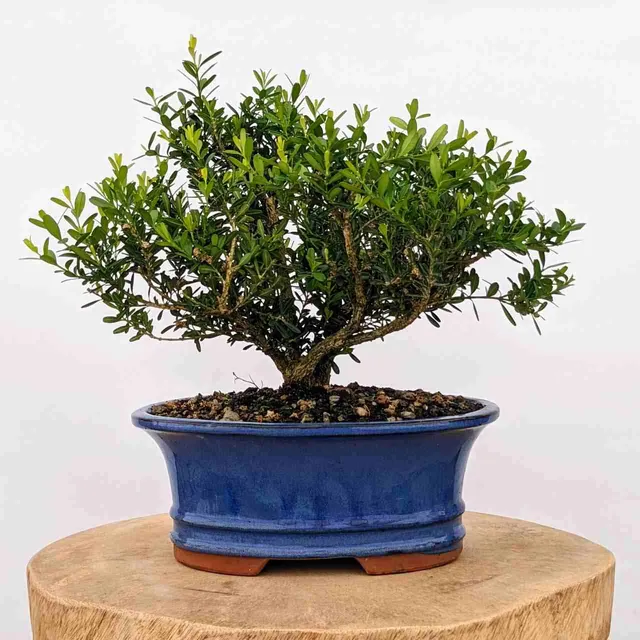
Quick care snapshot
| Care factor | What Bonsai Outlet recommends |
|---|---|
| Species | Harland Boxwood, Buxus harlandii; not the same hardiness as many landscape boxwoods |
| Best location | Outside in the growing season with bright light, airflow, morning sun and afternoon protection in extreme heat |
| Water | Check just below the surface; water thoroughly as the upper mix approaches dryness, before the root ball completely dries |
| Soil | Tinyroots All-Purpose for most beginners; Premium for experienced frequent waterers; never compact mulch or a waterlogged pot |
| Temperature | Protect the shallow pot from freezes; plan a cool bright frost-protected winter space in New England |
| Winter | Broadleaf evergreen that slows in cool weather; does not need to freeze; do not leave unprotected in MA Zone 5–6 |
| Feeding | BioGold for steady active-season outdoor feeding or Uncle Bill’s 3-3-3 as a simple liquid alternative |
| Pruning | After spring frost risk and when growing; preserve live interior foliage, avoid repeated heavy shearing |
| Difficulty | Moderate: straightforward pruning, but winter location and moisture are more demanding than common boxwoods |
What is a Harland Boxwood bonsai?
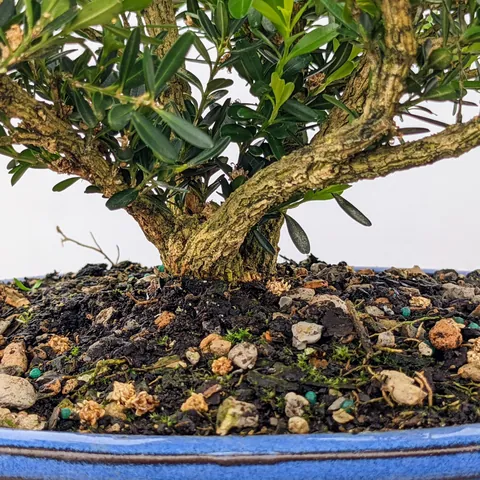
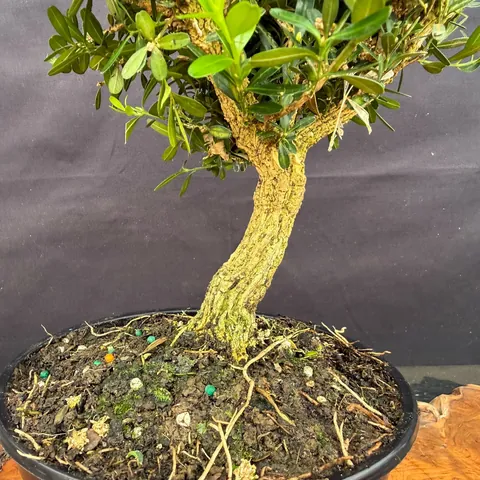
Harland Boxwood (Buxus harlandii) is a small-leaved, broadleaf evergreen boxwood from southern China. It is valued for its dense branching, attractive evergreen canopy, and the pale, aged trunk character that can make even a compact bonsai look remarkably mature. Although it shares a name with hardy landscape boxwoods, its winter tolerance is more limited.
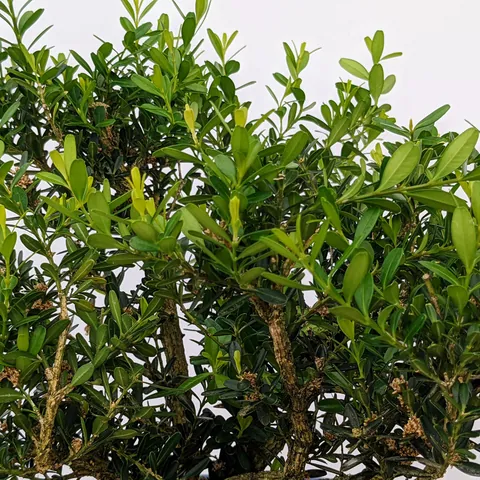
The leaves often have a slightly indented or notched tip and occur in opposite pairs. Old trunks can develop conspicuous texture, while new branches are relatively fine and respond well to controlled pruning. Boxwood flowers are small and usually not the feature bonsai owners purchase it for: this is a foliage-and-trunk tree.
One identification caveat: some plants sold in North America as Harland Boxwood may actually be related small-leaved Buxus forms. Ask for the botanical identification of your specific tree. This guide assumes Buxus harlandii, not a cold-hardy Buxus sempervirens cultivar.
Is Harland Boxwood an indoor or outdoor bonsai?
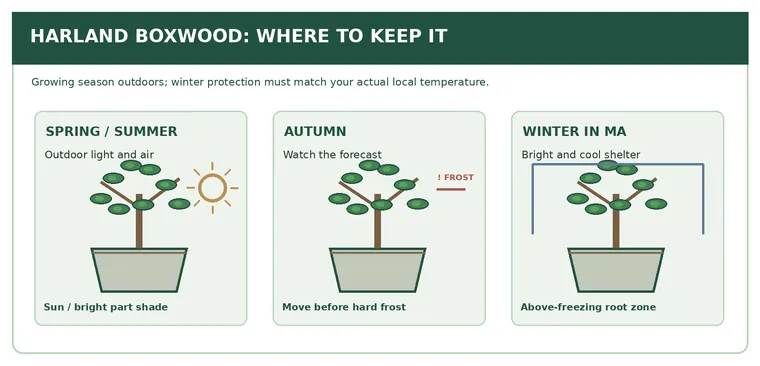
We sell and recommend Harland Boxwood primarily as an outdoor bonsai for the growing season. It benefits from sunlight, moving air, and natural day-to-night temperature changes. In colder climates, however, the right winter home is a bright, cool, frost-protected space—not an exposed bench, and not usually a warm, dark living room.
An indoor window can serve as temporary protected quarters if there is enough light and careful moisture management, but this is not our preferred year-round display tree for a typical home. Beginners who want a warm-room bonsai should understand this distinction before purchasing.
| Location | Suitable? | What to watch |
|---|---|---|
| Outdoor bonsai bench in spring–fall | Preferred | Morning sun, airflow, gradually adjust to stronger sun |
| Cool bright greenhouse for a MA winter | Preferred if frost controlled | Verify actual minimum pot temperature; check root-zone moisture |
| Bright enclosed porch or frost-free sunroom | Possible | Only if nights remain above freezing and light remains adequate |
| Heated living room year-round | Not our first recommendation | Warm dry air, weak light, pests and winter stress |
| Unheated greenhouse that drops below freezing | Not automatically safe | Greenhouse glazing does not guarantee root protection |
How much sunlight does Harland Boxwood need?
A bright outdoor setting with approximately three to six hours of useful sun is a practical starting range, not a strict target. Morning sunshine followed by light afternoon shade can be especially helpful during intense summer heat. In mild conditions, more direct sun may work; watch for bleaching, heat stress, and rapid soil drying.
Acclimate newly shipped or greenhouse-held trees over one to two weeks. Start with bright shade or morning light and increase exposure gradually. In winter, a protected tree still needs strong daylight or suitable horticultural lighting, even though its growth is slow. Do not store an evergreen bonsai in a dark garage for months.
What should you do with a new Harland Boxwood during the first 30 days?
The first month is about location and root health, not styling. Confirm your tree’s winter plan, establish how quickly its pot dries, and avoid combining shipping stress with repotting, wiring, heavy pruning, or aggressive feeding. Some leaves may yellow after a major change, but widespread drop, dark stems or persistently wet soil need investigation.
We spend time teaching customers where their Harland Boxwood will live in January, not just where it will look good in June. Finding the right winter location is often the difference between a healthy tree and one that declines despite careful summer watering.
How often should you water a Harland Boxwood bonsai?
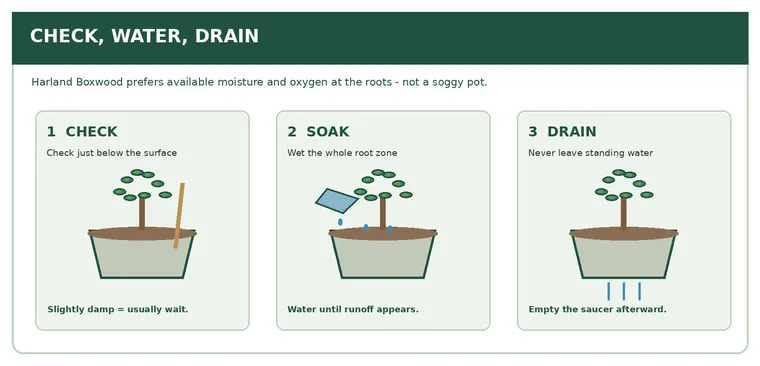
Harland Boxwood should stay evenly supplied with moisture without sitting in waterlogged soil. Check just below the surface; when the upper layer is approaching dryness, water the entire root ball slowly until it drains freely. Never assume it needs water because foliage is dull, or that it is safe because the surface still looks dark.
On a hot, breezy outdoor bench a shallow pot may need attention daily; in a cool winter greenhouse it can use water far more slowly. Test at root depth with a chopstick in very shallow pots. A moisture meter can help some growers, but the combination of soil feel, pot weight, drainage, and leaf condition is usually more dependable.
| Observation | Likely meaning | Next action |
|---|---|---|
| Top dry, inside just beginning to dry | Water use is progressing | Water thoroughly and let drain |
| Soil cool and moist an inch down | Water still available | Wait, recheck later |
| Pot light; soil dry deeper down | Possible drought stress | Rewet thoroughly and recheck the center |
| Soil wet for days; leaves yellowing | Poor aeration, low light, root trouble | Inspect drainage and conditions before watering again |
| Pot freezing or near freezing | Roots cannot replace lost moisture efficiently | Move to frost-free shelter; do not add hot water |
Which bonsai soil is best for Harland Boxwood?
We recommend a structured, fast-draining bonsai soil that retains useful moisture while leaving oxygen around fine roots. For most beginners, Tinyroots All-Purpose is the practical choice. Tinyroots Premium is a fully inorganic option for growers who can check water needs more frequently. Both are better controlled choices than dense mulch-heavy material marketed as premium bonsai soil.
Tinyroots All-Purpose contains expanded slate, pumice, lava, and a modest amount of appropriately sized pine bark fines. That is very different from a pot filled with finely shredded wood mulch. Pure or nearly pure mulch can compact, decompose, retain moisture unpredictably, and limit root aeration in a shallow container.
| Soil choice | Why we recommend it | Watch-out |
|---|---|---|
| Tinyroots All-Purpose | Easy everyday moisture management; sound drainage and a little organic water buffering | Do not leave permanently soggy |
| Tinyroots Premium | Akadama, pumice and lava; high aeration and more control for refined bonsai | May need more frequent watering |
| Mulch-heavy “100% organic premium” potting material | Not our recommendation for shallow Harland pots | High risk of compaction, persistent wetness, inconsistent aeration |
- Tinyroots All-Purpose Bonsai SoilOur practical choice for most beginnersShop →
- Tinyroots Premium Bonsai SoilFully inorganic: akadama, pumice and lavaShop →
Harland Boxwood is not an acid-loving azalea. Published horticultural guides describe it as adaptable across slightly acidic to mildly alkaline soils. Do not add lime or acidifiers routinely without a measured reason. Drainage and root health matter more to a beginner than chasing a narrow pH number.
Why are drainage holes and pot size important?
A Harland Boxwood needs a pot with open drainage holes and a root zone that can breathe. Roots that remain saturated are vulnerable to rot; roots in an extremely shallow, exposed pot are also susceptible to overheating or freezing. Choose a container suited to the tree’s stage of development, not simply the smallest show pot that fits.
A training pot with adequate soil volume often supports development better than a tiny glazed display pot. If you use a saucer indoors or during sheltered winter care, empty the collected water. Decorative outer containers should never conceal standing water around the bonsai pot.
What fertilizer should you use on Harland Boxwood?
Fertilize only when a Harland Boxwood is healthy and actively growing. Our primary recommendation for established outdoor bonsai is BioGold, an organic pellet fertilizer that provides steady nutrition. Uncle Bill’s Liquid Bonsai Brew 3-3-3 is a straightforward liquid alternative. Start with one measured program; fertilizer cannot compensate for poor light, frozen roots or soggy soil.
Begin feeding once spring growth is established and severe late frosts have passed. Reduce feeding as autumn growth slows and pause during a cool winter rest. Avoid pushing tender nitrogen-rich growth just before freezing temperatures. Follow the current product label for the tree’s pot size and watering frequency; do not double up full doses of liquid and pellet fertilizers.
- BioGold Japanese Bonsai FertilizerOur primary recommendation: steady organic pellet feedingShop →
- Uncle Bill’s Liquid Bonsai Brew 3-3-3A straightforward liquid alternativeShop →
- Reusable Bonsai Fertilizer BasketsHold pellet fertilizer in place on the soilShop →
At our Massachusetts nursery, BioGold is one of the fertilizers we rely on for outdoor and cold-hardy bonsai. For Harland Boxwood, the useful part is steady feeding during the growing season—not forcing rapid soft growth in autumn.
How do you prune and shape Harland Boxwood?
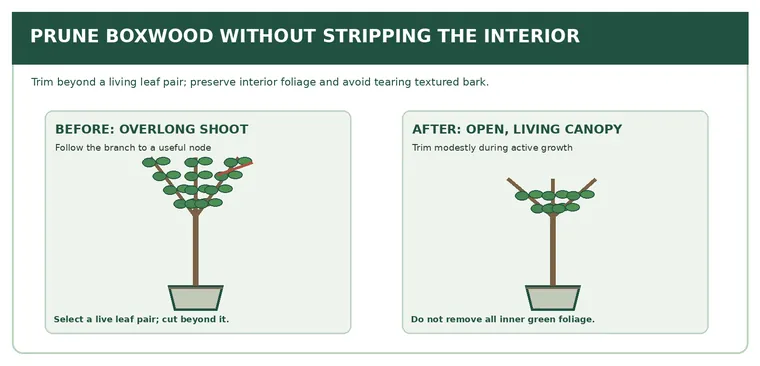
Prune when the tree is actively growing and the danger of late spring frost has largely passed. Shorten extended shoots toward healthy pairs of leaves, choosing a bud or branch direction that improves the silhouette. Thin congested areas selectively so the inner canopy receives light. Avoid stripping all green foliage from a branch or treating every trim like hedge shearing.
- Choose a healthy extended shoot that breaks the desired outline of your tree.
- Trace it inward to a living leaf pair or side branch. Make the cut a little beyond that point with sharp, clean shears.
- Check the crossing branches and crowded interior. Remove only what blocks light or creates rubbing.
- Leave the tree time to respond; repeat light maintenance during active growth rather than performing constant severe cutbacks.
Harland Boxwood can back-bud on older wood when vigorous, but never assume a completely bare branch will reliably recover. If your goal is a thicker trunk or branch, permit selected shoots to extend rather than trimming everything into a perfect ball. Use wiring sparingly: old branches can be brittle and the attractive bark can scar.
When should you repot a Harland Boxwood bonsai?
Repot only when the existing soil has broken down, water no longer penetrates properly, roots crowd the pot, or the tree genuinely needs a different container. For most beginners, spring as stable new growth begins is the safer window; wait until severe frost danger has passed. Harland Boxwood has a relatively shallow, fine root system that should not be aggressively reduced.
Do not repot simply because another calendar year passed. A healthy tree in functional soil can often wait. When repotting is needed, preserve a meaningful portion of healthy root mass, remove dead or damaged roots selectively, use fresh granular soil, secure the tree, and protect it from intense sun and wind while it recovers.
Aftercare matters. Keep the root zone gently moist but well aerated; do not allow the freshly disturbed roots to dry out or sit wet in cool weather. Delay major top pruning and normal fertilizer doses until new growth and root function are evident. If you are new to root work, use our repotting resources or book an in-person session before attempting major reductions.
How do you protect Harland Boxwood during a New England winter?
In Massachusetts and other cold regions, plan to move a potted Harland Boxwood into a bright, frost-protected space before sustained freezing weather. A practical conservative management range is roughly 40–55°F (4–13°C) when available, with natural daylight and ventilation. These are nursery-management targets, not universal biological injury thresholds or a reason to expose it to frost.
Some established plants can tolerate brief colder conditions, especially in the ground, but a shallow bonsai pot offers far less insulation. University references place Buxus harlandii in roughly USDA Zones 7–9 outdoors in the landscape; that does not make an exposed pot hardy in Bellingham, Massachusetts. Our advice is intentionally cautious.
A heated indoor room can prevent freezing but may create its own problems: dry air, low winter light and unwanted soft growth. A protected bright sunroom or temperature-controlled cool greenhouse is preferable. Never assume that an unheated greenhouse will remain frost-free—use a thermometer that records overnight minimums.
| Winter situation | Recommendation |
|---|---|
| New England / hard-freeze climate | Cool, bright, frost-protected winter housing; keep root zone unfrozen |
| Mild Zone 8–9 location | Outdoor culture may work; protect small pots from exceptional freezes and drying winds |
| Unexpected cold snap | Move promptly to a bright protected space; do not alternate between hot living room and freezing outdoors daily |
| Bright cool winter quarters | Check pot moisture; water when needed, much less frequently than summer; pause normal feeding |
| Tree already showing winter bronzing | Check branch flexibility, buds, soil and weather exposure before declaring the tree dead |
A cold-hardy greenhouse and a tropical greenhouse are not interchangeable. When we discuss winter protection, we mean the actual temperature of the Harland Boxwood’s pot and roots—not merely the label on the greenhouse door.
Does Harland Boxwood need winter dormancy?
Harland Boxwood is an evergreen temperate-to-subtropical shrub whose growth naturally slows during shorter, cooler days. It benefits from a seasonal reduction in growth, but it does not need its bonsai pot to freeze in order to survive. A cool bright winter period is different from the deep cold exposure required by many hardy conifers.
You may still see some color change in winter. Bronze or olive foliage after wind, cold or strong winter sun can signal environmental stress rather than permanent death. Assess new spring growth and living tissue before making drastic pruning decisions. Persistent black stems, widespread defoliation and a soft root base deserve closer inspection.
Why are the leaves turning yellow, brown or bronze?
Color changes have several causes, and no single leaf proves a diagnosis. Harland Boxwood may bronze from cold, wind or winter sunlight; yellowing can result from root stress, drought, nutrient limitations, or pests. Start by checking soil moisture at depth, drainage, the recent temperature history and whether the newest branch tips remain alive.
| Symptom | Possible cause | First check |
|---|---|---|
| Bronze or olive leaves after winter | Wind/cold exposure; winter desiccation | Pot-temperature history and living buds |
| Yellow leaves plus wet soil | Poor drainage or damaged roots | Check drainage, smell and condition of root zone |
| Dry brown tips and very light pot | Drought / heat / wind | Rewet and monitor root-zone moisture |
| Raised blisters within leaves | Possible boxwood leafminer | Inspect underside; identify before treatment |
| Cupped young leaves with waxy material | Possible boxwood psyllid | Open affected new growth and inspect |
| Sudden defoliation, dark lesions, dieback | Potential blight or serious disease | Isolate and seek local diagnostic confirmation |
What pests and diseases affect Harland Boxwood?
Inspect Harland Boxwood for boxwood leafminer, psyllids, mites and scale, especially during warm weather or before moving into winter shelter. Symptoms overlap with cultural stress. Leafminer larvae cause blistered leaves, psyllids can cup tender growth, and mites may create stippling. Confirm the pest before choosing any pesticide, and use only labeled products.
Boxwood blight is a separate concern and can cause leaf spots, stem lesions and rapid defoliation. If you see suspicious decline, isolate the tree from other boxwoods, avoid overhead splashing, clean tools between plants, and use local extension diagnostic resources. Do not assume a routine spray will cure an unconfirmed infection.
Where feasible, remove a few heavily affected leaves or shoot tips and discard them away from the bonsai benches. Insecticidal soaps and oils can themselves stress foliage under high heat or bright sun, so test a small area and follow the entire product label. Do not apply homemade dish-detergent recipes to bonsai.
Can you keep Harland Boxwood on a desk or give it as a gift?
It can make an excellent gift for someone with a patio, bright sheltered growing area, and a winter-protection plan. It is less suitable as a surprise office-desk bonsai: indoor overhead lighting rarely provides the strength needed for long-term growth. Tell the recipient in advance that the tree prefers outdoor conditions during the growing season.
Some evergreen leaves may discolor or drop after a shipping or location change. That is a reason to inspect the pot, leaves and moisture—not automatically to water more. A better gift package includes a simple location note and access to this guide rather than a promise that the tree will thrive on any windowsill.
What should you do through the seasons?
A Harland Boxwood’s care routine changes as daylight, temperature and growth change. In spring, introduce normal outdoor care and start feeding after reliable growth begins. In summer, emphasize light, airflow and moisture checks. In fall, reduce growth stimulation and plan protected quarters. In winter, guard roots against freezing while giving foliage light.
| Season | What to do |
|---|---|
| Spring | Ease outdoors as weather permits; watch late frost; repot only if needed as growth resumes; begin measured feeding |
| Summer | Outdoor light and airflow; monitor water closely; prune lightly and manage pests |
| Autumn | Allow growth to slow; taper fertilizer; protect against first hard frosts and drying winds |
| Winter | Bright cool frost-free quarters in northern climates; monitor moisture and minimum temperatures; little/no feeding |
What questions do beginners ask about Harland Boxwood?
Most first-time questions concern winter, watering and location—not advanced bonsai styling. The answers below summarize our advice for a typical Harland Boxwood in a shallow pot, particularly for customers in the Northeast. Always account for the tree’s actual growing history, the size of the pot, and local weather before changing its care.
Can Harland Boxwood live inside all year?
It may tolerate a very bright indoor setup, but it is not our first choice for warm-room culture. We recommend growing outdoors in suitable weather and keeping it cool, bright and frost-protected in northern winters.
Is Harland Boxwood cold hardy?
It has limited cold tolerance compared with many landscape boxwoods. References commonly give roughly Zones 7–9 for ground planting. A bonsai pot is much more vulnerable to freezing than garden soil.
Can I leave it outside in a Massachusetts winter?
Not unprotected. Plan a bright shelter that keeps the shallow root zone above freezing. Do not rely on an unheated greenhouse unless you have verified its overnight lows.
What temperature should I aim for in winter?
For a conservative northern bonsai routine, around 40–55°F in a bright protected setting is practical when available. Avoid freezing the pot and avoid very warm, dry, dim rooms.
Does it need cold dormancy?
Seasonally slower growth is normal, but intentionally freezing the roots is unnecessary and risky. Treat it as an evergreen needing a cool rest and sufficient winter light.
How often should I water?
Check the upper root zone and water thoroughly as it approaches dryness. An exposed summer pot may dry quickly; a cool winter pot may stay moist much longer.
Can I mist the leaves?
Misting is not a substitute for watering the roots. Good airflow and normal humidity matter more. Avoid prolonged wet foliage in crowded winter quarters.
Is Tinyroots All-Purpose suitable?
Yes. We favor it for beginners because it balances drainage, aeration and useful moisture retention. Never keep the pot saturated.
Should I use Tinyroots Premium?
Yes if you want an entirely inorganic mix and can monitor moisture more frequently. Its rapid drainage is an advantage when matched to your care routine.
Why not use 100% organic “premium” soil?
Finely shredded mulch is not the same as engineered aggregate bonsai soil. In small pots it can compact and hold moisture unpredictably, increasing root problems.
Which fertilizer is best?
BioGold is our preferred main recommendation for actively growing outdoor Harland bonsai. Uncle Bill’s 3-3-3 is a simple liquid alternative; do not stack full feeding programs.
When should I prune?
After severe spring frost danger and when the tree is growing. Cut toward living leaf pairs and avoid stripping the entire inner canopy.
When is the best time to repot?
Spring as healthy growth resumes is the beginner-friendly choice, avoiding late frost and hot, stressful periods. Repot because root/soil conditions require it, not automatically every year.
Can I remove a lot of roots?
Avoid drastic root reduction. Harland Boxwood has fine, shallow roots, and keeping a substantial healthy root mass helps recovery.
Why are leaves bronze after winter?
Cold, wind and winter sunlight can cause bronzing. Confirm moisture and living buds before diagnosing death; severe blackening or twig death needs further inspection.
Do boxwoods get pests?
Yes. Leafminer, psyllids, mites and scale may occur, though susceptibility varies. Identify a real insect or disease before spraying.
Will it grow in full sun?
It can tolerate strong sun, but morning sun and protection from fierce afternoon heat are safer while acclimating a potted bonsai.
Is it safe around pets?
Boxwood contains toxic alkaloids and should not be chewed or eaten by pets. Keep plants and pruning debris out of reach.
Can I wire the branches?
Yes, carefully. Older branches can be brittle and textured bark may mark. Clip-and-grow is often the easier starting method.
Is this a good beginner gift?
It can be, if the recipient knows it belongs outdoors in season and has a bright protected winter location. For someone with only a dim desk, choose another species.
Where can you learn more about caring for Harland Boxwood?
Bonsai Outlet, formerly New England Bonsai Gardens, has focused on bonsai since 1987. Our Massachusetts nursery team works with trees through changing seasons, and we encourage hands-on learning before difficult root work or styling. A local bonsai club is especially helpful for understanding how winter protection differs in your region.
- Bonsai Outlet workshopsHands-on instruction at our Massachusetts nurseryView →
- Private bonsai sessionsOne-on-one with a nursery professionalView →
- Harland Boxwood bonsaiShop the trees this guide coversShop →
- American Bonsai Society club directoryFind a local bonsai clubVisit ↗
- New England bonsai community on FacebookVisit ↗
When asking another grower for guidance, mention that your tree is Harland Boxwood, your local winter temperatures, whether the pot ever freezes, the soil blend and how much light it receives. Those details are often more useful than one isolated picture of a brown leaf.
Research and references
This guide combines Bonsai Outlet practical growing advice with published plant and pest information. For readability, references are collected here rather than footnoted through every beginner-care section.
- North Carolina State ExtensionBuxus harlandii↗
- Missouri Botanical Garden Plant FinderHarland Boxwood↗
- Cornell Cooperative ExtensionBoxwood cultivar guide (PDF)↗
- University of California IPMBoxwood leafminer↗
- University of Maryland ExtensionBoxwood psyllid↗
- University of Maryland ExtensionBoxwood problems↗
- Bonsai OutletHarland Boxwood product and basic care→
Bonsai Outlet Nursery Team — seasonal bonsai cultivation, repotting, maintenance, customer care and winter protection experience in Massachusetts and Florida. Reviewed .
Bonsai care disclaimer
The information in this guide is provided for educational purposes and is based on the growing experience of the Bonsai Outlet nursery team, established horticultural practices, and published research.
Every bonsai is unique. Watering, sunlight, temperature, fertilization, pruning, and repotting requirements can vary depending on the species, climate, season, soil, container, and growing environment. The recommendations provided are general guidelines and should be adjusted to the needs and condition of your individual tree.
While we make every effort to provide accurate and helpful information, Bonsai Outlet cannot guarantee specific growing results or be responsible for plant damage or loss resulting from the use of this guide.
For additional guidance, we encourage you to explore our educational resources, attend a bonsai workshop, consult a local bonsai club, or schedule a private session with one of our bonsai professionals.
© 2026 Bonsai Outlet. All rights reserved.