null

Juniper Bonsai Trees

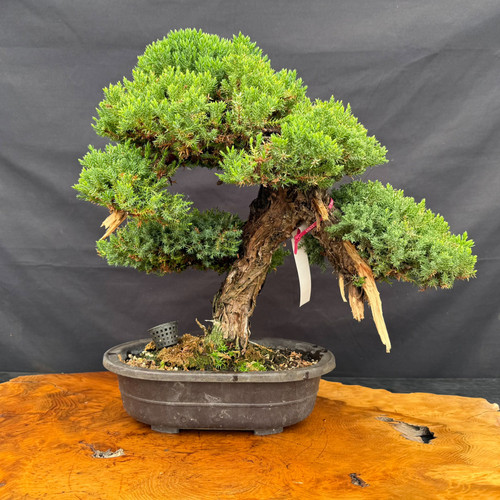
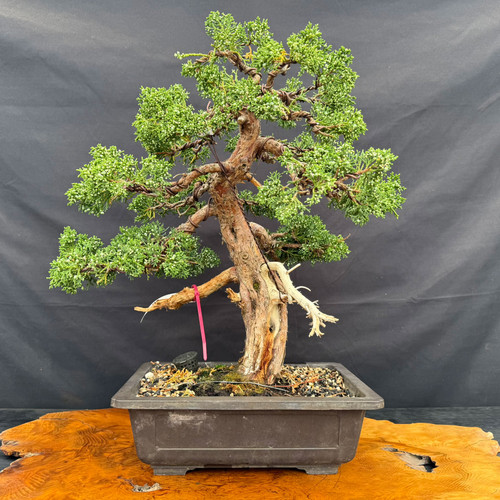
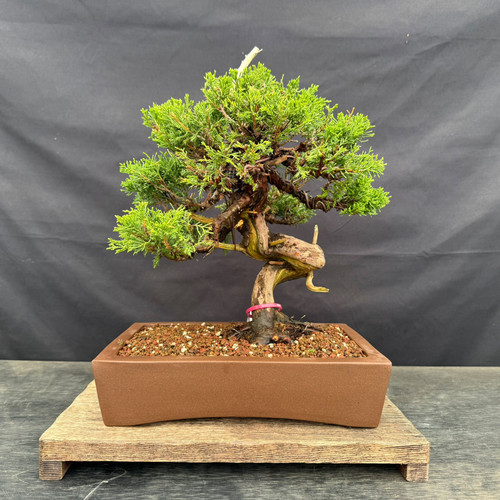
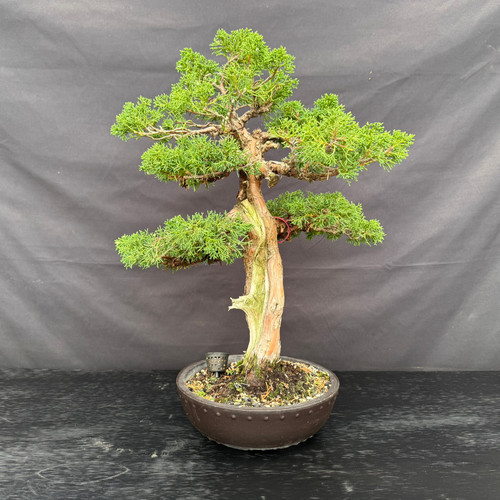
Juniper Bonsai Trees for Sale

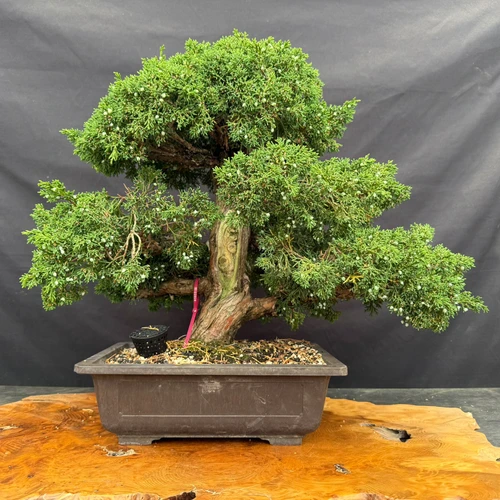
The juniper is the tree most people picture when they hear the word bonsai, and it's one of the best trees to learn on. Hardy, forgiving of beginner pruning, and flexible enough to wire into almost any shape you can imagine.

One thing to know before you buy: junipers are outdoor trees. They need real seasons, including a cold winter dormancy, and they slowly decline if kept as a houseplant. If you're looking for a bonsai to live indoors, start with a ficus or a Chinese elm instead. If you have a porch, patio, balcony, or yard, a juniper is close to the perfect first tree.

Grown and styled at our own nursery, hand-packed, and backed by our 100% guarantee.

Why junipers are the classic first bonsai

Junipers earned their reputation honestly. They're vigorous, so they bounce back from the over-enthusiastic first pruning almost everyone does. Their branches stay flexible for years, which means you can wire and re-wire while you learn without snapping anything. They handle a wide range of climates. And they look like a bonsai should: rugged bark, dense foliage pads, and the kind of trunk movement that reads as an old tree in miniature.

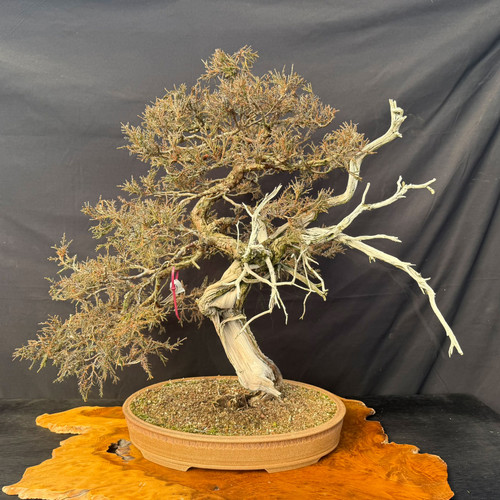
They're also the tree that teaches the most. Wiring, pad development, deadwood work like jin and shari (the silvery stripped-bark features you see on collected trees) all start with junipers. Skills you build here transfer to every conifer you'll ever own.

Indoor or outdoor: the honest answer

Junipers are outdoor trees. Full stop.

This is the single most common mistake we see, and it's usually not the buyer's fault. Junipers get sold as desk plants and gift-shop novelties all the time, and the tree looks fine for a month or two. Then it browns from the inside out, and by the time it looks bad it's usually too late.

Here's the mechanism, so it makes sense: junipers evolved with seasons. They need a cold dormancy each winter to rest and reset. Indoors, in stable warm temperatures, they never get that rest. They keep burning energy without a recovery period, and they run out.

What a juniper needs:

  • Outdoor placement year round, in full sun to light afternoon shade
  • Winter cold, with protection for the pot in hard-freeze climates
  • Daily water checks in summer, when a small pot can dry out in an afternoon

You can absolutely bring one inside for a day or two to enjoy on a table. Just put it back out.

Types of juniper bonsai we grow

Shimpaku (Juniperus chinensis) is the classic Japanese bonsai juniper and the backbone of our collection. Soft scale foliage, excellent bark, and a deserved reputation as the premium choice for serious styling.

Kishu is a Shimpaku selection with tighter, finer foliage pads. A favorite when the goal is refinement at a smaller size.

Itoigawa is another Shimpaku selection, prized for its bright green, very fine foliage and its willingness to back-bud where you want it.

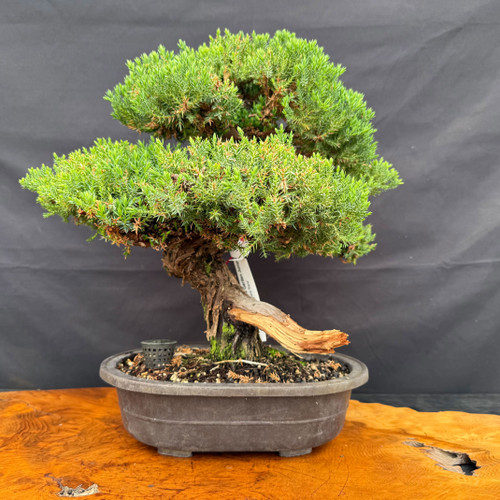
Procumbens nana, also sold as Green Mound juniper, is the tough, inexpensive, endlessly forgiving beginner juniper. This is the one most people learn on, and the one from the films.

San Jose and Rocky Mountain junipers show up in smaller numbers, usually as collected or older material with real character. Availability rotates.

What juniper bonsai cost

Our junipers run from about $25 for young pre-bonsai starter material up past $3,500 for developed specimen trees, with most landing between $50 and $300.

The spread comes down to trunk and time. A young Procumbens nana in a plastic grow pot is inexpensive because it's mostly potential. A styled Shimpaku with a thick, twisting trunk and established foliage pads represents a decade or more of someone's work, and it's priced accordingly.

If you're starting out, there's no shame in the inexpensive end. A $25 pre-bonsai is the best wiring practice you'll ever buy.

Wiring and shaping your juniper

Junipers are where nearly every bonsai grower learns to wire, because they tolerate it so well.

The basics: wire should be roughly one third the thickness of the branch you're bending. Wrap at about a 45 degree angle, snug but never biting into the bark. Bend gradually rather than in one motion. Then check every few months, because a growing branch will swell into the wire and scar if you forget it. On a vigorous juniper in summer, that can happen faster than you'd expect.

Best season to wire is late fall through winter, when growth has slowed. Everything you need is in bonsai wire and shaping.

Winter care in cold climates

We grow in Massachusetts, so this comes up constantly. Junipers are hardy, but the roots in a shallow ceramic pot are far more exposed than roots in the ground.

Once the tree is dormant, protect the pot: an unheated garage or shed, a cold frame, or simply heeling the pot into the ground and mulching over it all work. The tree wants cold, not a warm garage. Water occasionally through winter, since dormant roots still need moisture. Full detail is in our winter care guide.

Juniper bonsai questions, answered

Can I keep a juniper bonsai indoors?

No, not long term. Junipers need a cold winter dormancy and outdoor light levels to stay healthy. Indoors they look fine for a month or two, then decline from the inside out. For an indoor bonsai, choose ficus, jade, or Chinese elm instead.

Do junipers make good bonsai trees?

Junipers are one of the best bonsai species, especially for beginners. They are vigorous enough to recover from learning mistakes, their branches stay flexible for wiring, they suit a wide range of climates, and they develop rugged bark and trunk movement that make a bonsai look genuinely old.

How hard is it to keep a juniper bonsai alive?

Not hard, as long as it lives outside and is watered consistently. Check the soil daily in summer heat, water thoroughly when the top half inch feels dry, and give the tree real winter cold with the pot protected from hard freezes.

How do I start styling a juniper bonsai as a beginner?

Start with an inexpensive pre-bonsai and practice on it. Learn to wire before you learn to prune, because wire is reversible and a cut branch is not. Choose the front of the tree, decide which branches create your silhouette, remove what clutters it, then wire the rest into position over several seasons.

What is the average lifespan of a juniper bonsai?

Junipers are long-lived trees, and a bonsai in good care can outlast the person caring for it. Some collected junipers in Japanese collections are several hundred years old and still in training. Lifespan in a pot comes down to care consistency rather than any built-in limit.

Is the juniper the bonsai tree from The Karate Kid?

Yes. The tree in the films is a Procumbens nana, also sold as Green Mound juniper. It remains one of the most popular first bonsai, and it is genuinely a good beginner tree: tough, inexpensive, and forgiving.

Bonsai people, not a warehouse.

Family-owned roots going back to 1987. We grow, style, pack, and ship from our own nursery: 8 greenhouses in Bellingham, Massachusetts, plus a Florida operation for year-round tropicals. Every tree is hand-selected and backed by our 100% guarantee.

Visit us in Bellingham for hands-on workshops nearly every weekend. All skill levels welcome. More about us on who we are.

Junipers pair naturally with unglazed bonsai pots. Newer to bonsai? Start with our beginner bonsai trees or browse all outdoor bonsai trees.

Not All Bonsai Are Created Equal – Here’s Why We’re Different

Since 1987, we’ve Grown, Imported, Styled, Boarded, Sold, and Taught the art of bonsai—experience the PREMIUM difference.

  • Rigorous Quality Control Meticulous inspections
    guarantee top-tier quality.
  • Hand-Selected Excellence Curated globally, never
    mass-produced.
  • Decades of Expertise Mastering the art
    of bonsai since 1987
  • Expertly Styled Premium bonsai soil, securely
    anchored roots, ceramic pots
    with optimal drainage.
  • Exclusive Specimens Rare and unique trees
    for discerning collectors.
  • Lush, Vibrant Foliage Radiates exceptional
    health and care
  • Dedicated Support Expert care guidance
    with every purchase.
Bonsai Tree

Bonsai: Living Masterpieces—Expertly Pruned, Styled, and Crafted to Embody Nature’s Elegance and Balance.

Customer Reviews & Success Stories

Review Ratings

Great Service and Great Tree

Great Service and Great Tree Came quickly and was in great shape Reasonable prices for what i received

- Edmund L
Review Ratings

All is good. I now

All is good. I now have 6 bonsai. All are thriving. Everything you sent was quality. Thank you David

- David M

Bonsai is all we do Since 1987

NEBG began life as a single rented greenhouse way back in 1987.

Today, it’s a sprawling eight-acre nursery in Bellingham, MA, complete with eight separate greenhouses and the largest Bonsai Tree & Supply collection on the East Coast.

About Us About Us

30+

Years in business

4000+

Active members

1000's

of bonsai for sale

OLDEST

Bonsai on display in NE

Popular

FAQs

FAQs View All FAQs

Contrary to popular belief, Bonsai Gardening isn’t difficult. Some trees are more less difficult than others, but there’s nothing to be intimated by.

We usually respond to this by telling people that it is possible to kill anything, but given that, here are a few helpful facts: If you are just starting out and planning on keeping your bonsai inside most of the time you need a tropical tree. A succulent, like Mini Jade is good to start with. Other good varieties include Arboricola, Brazilian Rain Tree and Chinese elm.

Unfortunately it is impossible to list the symptoms of either in a concise manner.

Very generally speaking, if the roots collapse from lack of water you are likely to see a ‘freeze dried’ look to the leaves or needles. This will happen quite soon after the roots get too dry. Usually within a day or matter of a few days.

Over watering usually takes longer and results in a slower decline but both should be avoided.

Trust your instincts and review your habits, and remember, trees are trees and will grow leaves and drop leaves ( or needles) naturally, so some seasonal dropping of foliage is normal.

No, you will need to transplant it. Usually every one to three years is the norm.

We usually respond to this by telling people that it is possible to kill anything, but given that, here are a few helpful facts: If you are just starting out and planning on keeping your bonsai inside most of the time you need a tropical tree. A succulent, like Mini Jade is good to start with. Other good varieties include Arboricola, Brazilian Rain Tree and Chinese elm.

What to Expect
Upon Arrival

  • Foliage Expectationt

    Some bonsai species (like Chinese Elm) may shed leaves during transit – this is normal and healthy.

  • Tree Care Upon Arrival

    Water your bonsai upon arrival and place it in a bright spot to help it acclimate.

  • Safe Packaging Process

    Your tree is packaged securely with protective materials to prevent damage during transit.

  • Potential Transit Stress

    Some bonsai may experience slight stress during transit; rest assured they will recover with proper care.